
When We Can Talk to Ants
What ant colonies, AI decoding, and non-human intelligence might teach us about communication, power, and attention.
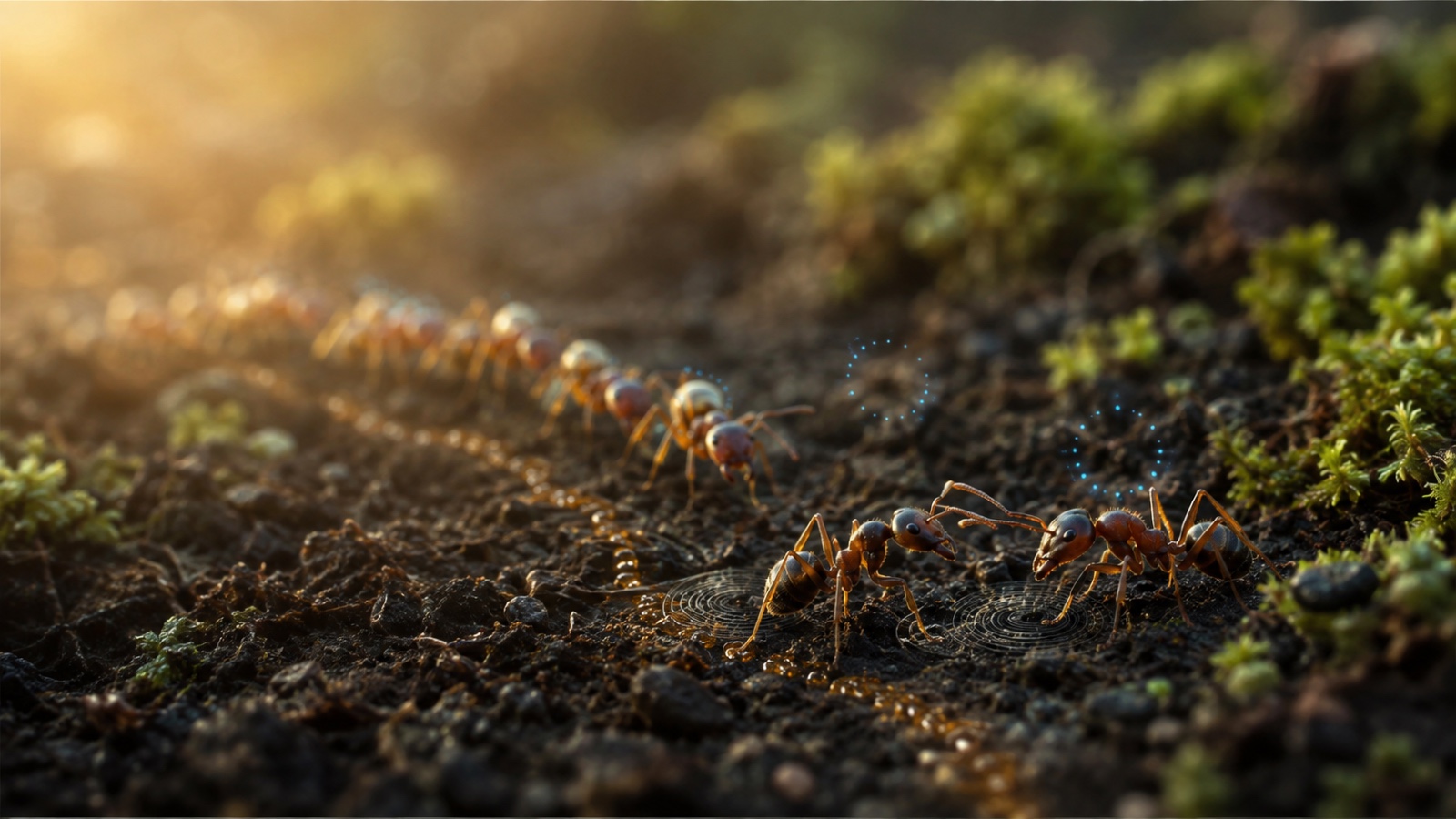
If you have ever left a crumb on the kitchen counter and returned to find a neat line of ants, you have already watched a message travel. One ant found food. Somehow, the others learned where it was. Within minutes, a route appeared.
We call this instinct because we do not know what else to call it. But from the ants’ point of view, something organised is happening. What looks like silent movement to us is a constant exchange of information.
Perhaps the real question is not whether ants can talk. It is whether we can learn to listen.
AI is already helping researchers find patterns in whale communication, so the idea is not entirely science fiction.
A Language We Cannot Hear
Ants do not need words. Much of their communication happens through pheromones, chemical signals that can lead a colony towards food, warn of danger or help ants recognise members of their own nest.
Chemicals are only part of the story. Ants also touch one another with their antennae and send vibrations through leaves, soil and nest walls. Some species produce these vibrations by rubbing parts of their bodies together, a process called stridulation.
To us, the colony may look crowded and chaotic. Yet every ant is receiving small pieces of information and responding to them. No single ant has the full picture, but together they can find efficient routes, build complex nests and react quickly to threats. The intelligence is not held by one leader. It emerges from the group.
This is where artificial intelligence could help. Cameras can track individual ants, chemical sensors can identify pheromones, and sensitive instruments can capture tiny vibrations. AI can then look for connections between a signal and whatever happens next. Researchers have already used automated tracking and machine learning to study how alarm signals move through seed-harvester ant colonies.
An early “ant translator” would probably be basic. It may not give us sentences, but it could recognise meanings such as “food nearby,” “danger,” “intruder” or “help needed.” Over time, we might discover combinations and context that are currently invisible to us.
What Would We Ask Them?
Our first questions would probably be practical, and very human. Where is the nest? Why did you enter the house? How can we stop you from damaging crops without destroying the entire colony?
The more interesting questions would come later. What changes in the soil can ants detect before we do? How do they know when a nest is no longer safe? How does a colony choose between two routes when no one is in charge? Could their behaviour warn us about drought, pollution or other damage to an ecosystem?
Eventually, listening could become communication. Scientists might recreate a chemical or vibration and see whether the ants respond as expected. It would not be a conversation in the way two humans speak. It would be more like building a small bridge between two very different kinds of intelligence.
The Uncomfortable Part
That bridge would also give us power. A manufactured trail could redirect thousands of ants. A false alarm could make a colony abandon an area. Used carefully, this might protect crops, reduce pesticide use or help threatened ecosystems. Used carelessly, it could turn a living society into something we program for our convenience.
And that leaves us with a difficult question: if another species can understand a message from us and respond to it, do we owe it greater consideration?
Talking to ants may not reveal tiny philosophers beneath our feet. It may teach us something more useful: intelligence does not need to sound, think or organise itself like ours. Ant colonies have been building, adapting and making collective decisions for millions of years.
Perhaps the breakthrough will not be that ants finally speak to us. It will be that, for once, humans learn to pay attention.